
 Save to Pinterest
 This rustic German-inspired casserole transforms humble cabbage into something extraordinary through slow roasting. The process mellows the sauerkraut's tanginess while concentrating the natural sweetness of roasted cabbage. Aromatic vegetables, caraway seeds, and smoked paprika build layers of flavor that develop beautifully over two hours in the oven. The result is a tender, comforting dish with caramelized edges and a deep savory profile. Perfect served with sour cream and rye bread, it's satisfying as either a main course or hearty side.
The smell of cabbage roasting low and slow in the oven is one of those underrated kitchen aromas that fills every corner of the house with warmth. My neighbor once knocked on my door during a snowstorm just to ask what was baking because the scent had drifted through the shared hallway. That casserole turned a gray January evening into something worth remembering, and I have been making it every winter since.
I made this for a potluck dinner where everyone brought elaborate dishes, and mine was the humble cabbage casserole sitting between a glazed ham and a fancy tart. People kept coming back for seconds, and my friend David admitted he had never eaten cabbage voluntarily until that night. Sometimes the simplest things on the table carry the most weight.
Ingredients
- 1 medium green cabbage (about 2 lbs), cored and sliced: The real star here, so pick one that feels heavy and dense with crisp outer leaves.
- 2 cups sauerkraut, drained and rinsed: Rinsing tames the sharpness just enough while keeping that tangy punch the dish needs.
- 2 medium onions, thinly sliced: Onions melt into sweetness during the long roast and balance the sauerkraut beautifully.
- 2 carrots, grated: They add subtle sweetness and a nice fleck of color throughout the casserole.
- 2 cloves garlic, minced: Fresh garlic makes a difference here, so skip the jarred stuff if you can.
- 2 tbsp olive oil: A good coating oil helps everything caramelize without sticking.
- 1 tsp caraway seeds (optional but traditional): These tiny seeds are the soul of German cabbage dishes and add an earthy, almost licorice warmth.
- 1 tsp smoked paprika: This gives the whole dish a subtle smokiness that makes people wonder what your secret ingredient is.
- 1/2 tsp ground black pepper: Freshly cracked is always better, and a half teaspoon is just enough warmth without overpowering.
- 1 tsp salt (adjust to taste): Start with a teaspoon and taste before serving because sauerkraut brings its own saltiness.
- 2 tbsp fresh dill, chopped (or 2 tsp dried dill): Dill and cabbage are old friends, and the herb brightens everything at the end.
- 1 cup vegetable broth: This keeps the casserole moist during the long roast and adds another layer of savory depth.
- 1 cup sour cream (for serving, optional): A cool dollop on top creates the most satisfying contrast against the hot, roasted vegetables.
- 1/2 cup grated Gruyere or Swiss cheese (optional): That golden bubbling crust on top turns a simple dish into something truly special.
Instructions
- Get the oven ready:
- Preheat your oven to 325 degrees F and grease a large casserole dish so nothing sticks during the long bake.
- Wake up the aromatics:
- Heat olive oil in a large skillet over medium heat and sauté the sliced onions and minced garlic until soft and fragrant, about 4 minutes. You will know they are ready when the kitchen smells like something wonderful is about to happen.
- Bring everything together:
- In a large mixing bowl, combine the sliced cabbage, grated carrots, sautéed onions and garlic, sauerkraut, caraway seeds, smoked paprika, pepper, salt, and dill. Toss it all with your hands or a large spoon until every piece is evenly coated with seasoning.
- Build the casserole:
- Transfer the mixture into your prepared casserole dish and pour the vegetable broth evenly over the top. Press everything down gently so the liquid reaches all the layers.
- Slow roast covered:
- Cover the dish tightly with foil or a lid and slide it into the oven for 1 hour and 30 minutes. This long covered roast is what transforms tough cabbage into something meltingly tender.
- Uncover and finish:
- Remove the foil, stir the casserole gently, and sprinkle cheese on top if using. Return it to the oven uncovered for another 30 minutes until the edges caramelize and the cheese is bubbling and golden.
- Rest and serve:
- Let the casserole sit for about 10 minutes before serving so the juices settle. Serve warm with a generous spoonful of sour cream on top if you like.
 Save to Pinterest
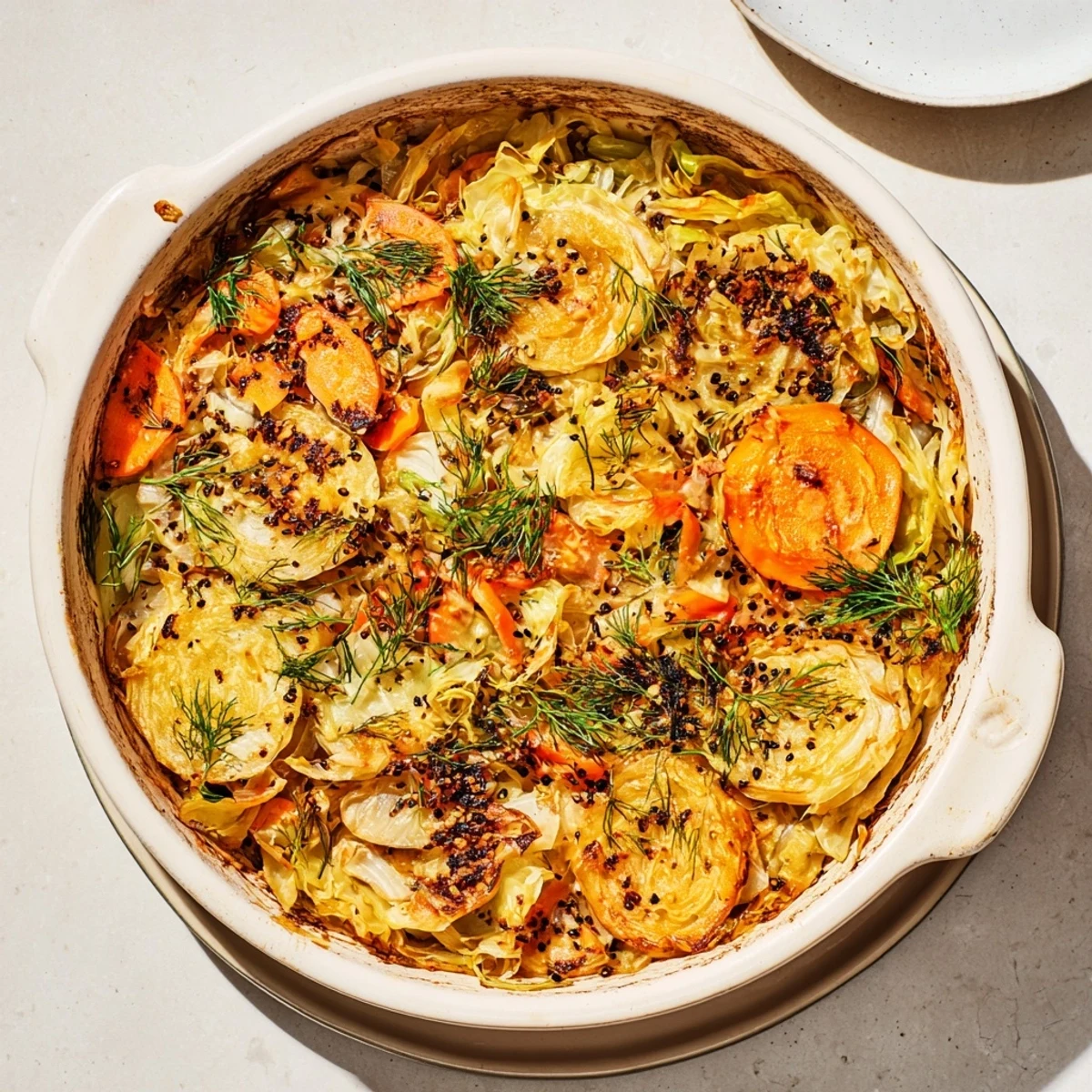
 The moment that cheese bubbles and the top layer of cabbage turns golden brown at the edges is when this dish stops being humble and starts being magical. I have watched people who swore they hated cabbage go back for a third helping.
Making It Your Own
This recipe is wonderfully flexible, so do not be afraid to riff on it depending on what you have on hand. Toss in sliced kielbasa or smoked sausage if you want something heartier, or scatter toasted breadcrumbs on top for crunch without the cheese. The bones of the dish are sturdy enough to handle almost any variation you throw at it.
Serving Suggestions Worth Trying
A thick slice of dark rye bread on the side is practically mandatory in my house because it is perfect for soaking up the savory broth left at the bottom of the dish. A cold German lager alongside turns a weeknight dinner into something that feels like a small celebration. Even a simple green salad with a sharp vinaigrette cuts through the richness nicely.
Storage and Reheating
This casserole keeps beautifully in the refrigerator for up to four days and actually improves overnight as the flavors continue to meld together. Reheat it covered in a 350 degree oven for about 20 minutes or microwave individual portions with a splash of broth to keep things moist. It also freezes well for up to two months if you want to stash some away for a night when cooking feels impossible.
- Let it cool completely before covering and refrigerating so condensation does not make it soggy.
- Add a little extra broth when reheating to bring back that just baked texture.
- Freeze individual portions in airtight containers for easy weeknight meals.
 Save to Pinterest
 Some recipes become staples because they are impressive, but this one earns its place because it is honest, nourishing, and endlessly comforting. Make it once and it will quietly become part of your winter rotation without any fanfare at all.
Recipe FAQs
- → What makes slow roasting better than regular baking for cabbage?
-
Slow roasting at 325°F allows the cabbage to gradually break down and caramelize without drying out. This longer, gentler cooking process transforms the texture into melting tenderness while concentrating natural sugars for deeper flavor complexity.
- → Can I prepare this casserole ahead of time?
-
Absolutely. Assemble the entire casserole up to 24 hours in advance, cover tightly, and refrigerate. Add 10-15 minutes to the initial covered baking time if cooking straight from the refrigerator. The flavors often improve after resting overnight.
- → Is rinsing sauerkraut really necessary?
-
Rinsing removes excess brine and helps balance the tanginess, especially important if your sauerkraut is particularly sour or heavily salted. However, if you enjoy robust fermented flavors, you can skip this step and reduce the added salt accordingly.
- → What can I use instead of caraway seeds?
-
Fennel seeds provide a similar anise-like flavor profile, while cumin offers earthier notes. For completely different but delicious results, try juniper berries for Alpine authenticity or simply omit them—the smoked paprika carries plenty of flavor on its own.
- → How do I know when the casserole is finished?
-
The cabbage should be completely tender when pierced with a fork, and the top should display golden-brown caramelization. Some pieces may even be slightly crispy at the edges. If adding cheese, look for bubbling and light browning across the surface.
- → Can I freeze leftovers?
-
Yes, this freezes exceptionally well. Portion cooled leftovers into airtight containers or freezer bags, and freeze for up to 3 months. Thaw overnight in the refrigerator before reheating in a 350°F oven until warmed through, about 20-30 minutes.